How to choose your first keyboard
Looking for the best keyboard for beginners in Kenya? Walking into Vintage Sounds on Tiriki Lane, I meet many first-time buyers who feel overwhelmed by the choices. Having helped hundreds of customers, I know the right keyboard can make learning music enjoyable and practical, whether it’s for church, school, events, or home use.
What Will You Use Your Keyboard For?
The best keyboard for beginners in Kenya depends on your main use. Here are some real-life settings:
- Church: Most churches need a keyboard with good piano and organ sounds, touch sensitivity, and enough keys for worship music. If your church is just starting, a simple 61-key model often works well.
- School: For music classes or practice, look for a sturdy keyboard with clear labeling and built-in learning features. Portability is important if you move between classrooms.
- Events and Weddings: You’ll want a keyboard that is easy to set up, has a microphone input, and can connect to speakers. Lightweight models are ideal for frequent travel.
- Home Use: For home practice, a beginner-friendly keyboard with built-in rhythms and headphones output helps keep the learning process fun and quiet.
Keys and Touch: What Matters Most?
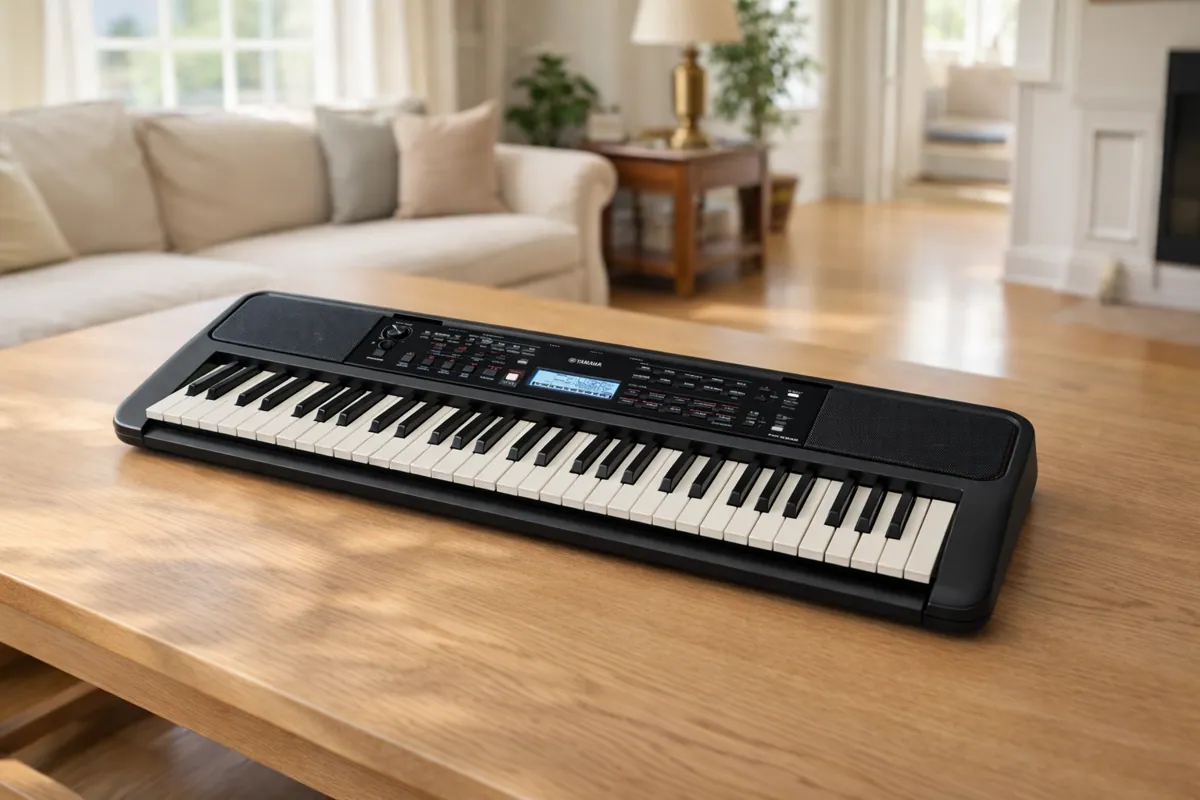
When choosing the best keyboard for beginners in Kenya, the number of keys is a good starting point. Most entry-level keyboards have 61 keys, which cover all basics. For classical or advanced learners, 76 or 88 keys are better, but they are often larger and cost more.
Touch sensitivity is another key feature. This means the keyboard responds to how hard or soft you press the keys, just like a real piano. It helps improve expression and prepares you for playing on larger instruments later.
Sounds and Features You Need
Most beginners enjoy a keyboard that has many built-in sounds, piano, organ, guitar, drums, and more. Some keyboards include rhythms and backing tracks, which make practice more interesting. Look for simple controls and a clear display. Built-in speakers are a must unless you always plan to use headphones or external speakers.
For church and school, make sure your keyboard can connect to a sound system. A standard headphone or line-out jack usually does the job. For events, look for microphone input if you want to sing or make announcements.
Portability and Power
If you’ll be carrying your keyboard between home, school, or church, weight and size matter. Choose a compact, lightweight keyboard with a carrying bag. Also, check if it can run on batteries for places without reliable power, like rural churches or outdoor events.
What to Check in the Shop
- Try the keys: Play some notes. Are the keys comfortable? Do they feel solid, not flimsy?
- Test the sounds: Scroll through all the main tones. Are they clear and pleasant?
- Check the display and controls: Can you easily find the sounds and settings you need?
- Look at inputs and outputs: Does it have a headphone jack, microphone input, and connections for speakers?
- Ask about power options: Does it come with a power adapter? Can it use batteries?
What Else Do Beginners Need?
To make the most of your new instrument, consider these extras:
- Keyboard stand: For stable playing at home, school, or church.
- Bench or chair: Helps with good posture during practice.
- Headphones: For quiet practice at home.
- Music book holder: Useful for reading notes or lyrics while playing.
Browse Our Keyboards
Choosing the best keyboard for beginners in Kenya is about matching your needs with the right features. At Vintage Sounds, we have a wide selection of Keyboards to suit every setting, from home practice to lively church services or school music classes. Our team is here to guide you and answer your questions before you buy.
Ready to get started? Call or WhatsApp us on 0728 118246, or visit Vintage Sounds on Tiriki Lane, Nairobi. Let’s find the best keyboard for beginners in Kenya together.